
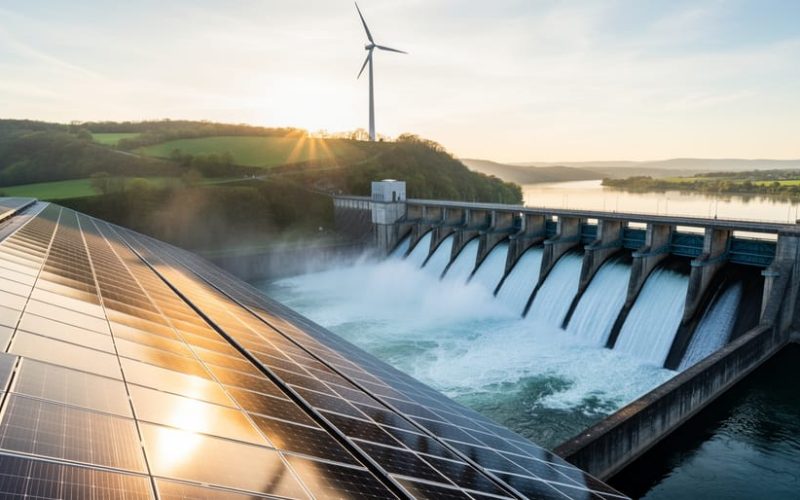
The three renewable energy sources transforming business strategy and market positioning in 2026 are solar photovoltaics, wind turbines, and hydroelectric power. Each offers distinct promotional advantages: solar’s modularity and visible installations create compelling visual narratives for residential and commercial markets, wind energy’s scale and consistency appeal to industrial clients seeking stable long-term contracts, and hydropower’s reliability positions it as the dependable baseload solution for utility-scale messaging. Understanding how to communicate these differentiators determines whether your renewable energy business captures market attention or blends into an increasingly crowded field.
The renewable energy sector has matured beyond purely environmental messaging. Today’s business professionals recognize that technical specifications matter less to clients than understanding which energy solution aligns with their operational needs, budget constraints, and corporate sustainability commitments. A distributed solar array tells a different story than an offshore wind farm, and your promotional approach must reflect that distinction.
This shift requires renewable energy companies to move past generic “clean energy” positioning. Solar businesses succeed by emphasizing installation speed, predictable energy costs, and visual proof of environmental commitment. Wind energy providers win contracts by demonstrating capacity factors, grid stability contributions, and economies of scale. Hydropower operators differentiate through reliability metrics, seasonal flexibility, and proven decades-long operational records.
The challenge lies not in explaining how these technologies work but in articulating why a specific energy source solves a particular client’s problem better than alternatives. Marketing renewable energy in 2026 means translating kilowatt-hours into business outcomes, capacity factors into competitive advantages, and technical capabilities into client confidence. The companies that master this translation dominate their market segments, while those stuck in technical specifications struggle to close deals despite offering excellent technology.
Solar Energy: The Front-Runner in Business Visibility
Why Solar Leads Business Marketing Strategies
Solar energy dominates renewable energy marketing because consumers already understand what it is and how it works. Unlike wind or hydropower, which require specific geographic conditions and infrastructure explanations, solar panels present a simple value proposition: sunlight becomes electricity. This universal recognition gives businesses an immediate advantage when communicating with potential clients who don’t need extensive education before considering a purchase.
The visual nature of solar installations amplifies this marketing edge. Rooftop panels and solar farms photograph well, creating compelling content for websites, social media, and promotional materials. Companies can showcase before-and-after imagery, demonstrate system scalability from residential to commercial applications, and use aerial photography to highlight large-scale projects. This visual storytelling capability makes solar panel marketing inherently more engaging than promoting less visible energy technologies.
Consumer trust stems from solar’s proven track record and tangible presence in neighborhoods worldwide. When prospects see solar installations on nearby homes and businesses, they perceive reduced risk compared to less familiar technologies. Solar companies leverage this trust by emphasizing warranty periods, performance monitoring capabilities, and straightforward ROI calculations that resonate with business decision-makers.
The modular nature of solar systems allows companies to serve diverse market segments with a single technology platform, from small residential installations to utility-scale solar farms. This scalability enables businesses to craft targeted messaging for different customer types while maintaining consistent branding and technical expertise across all promotional channels.
Key Solar Features That Attract Business Clients
Businesses promoting solar solutions understand that technical specifications alone don’t close deals. The most successful solar companies frame their offerings around specific client features that directly address customer pain points and business objectives. Rather than leading with kilowatt capacity or panel efficiency ratings, effective marketers emphasize modular scalability, the ability to start with a small system and expand as energy needs or budgets grow. This flexibility appeals particularly to small and medium enterprises that want to test solar performance before committing to full-scale deployment.
Energy independence remains one of solar’s strongest promotional angles. Companies highlight how their systems reduce reliance on volatile grid electricity prices and provide insulation against future rate increases. Forward-thinking businesses also emphasize battery storage compatibility, positioning solar not just as daytime power generation but as a complete energy resilience solution. ROI timelines vary by installation size and location, but transparent projections, typically showing payback periods between five and ten years, build credibility and help clients justify capital expenditure.
Modern solar promotions also showcase:
- Scalable system designs that accommodate future expansion without major retrofitting
- Energy storage compatibility for 24-hour power availability and grid independence
- Real-time monitoring systems accessible via smartphone apps for performance tracking
- Comprehensive warranty terms covering panels, inverters, and installation workmanship
- Aesthetic integration options including building-integrated photovoltaics and low-profile mounting
Integration with smart building systems represents an emerging promotional focus. Businesses increasingly market solar as part of comprehensive energy management platforms that optimize consumption patterns, automate load shifting, and provide detailed analytics. This positions solar not as a standalone product but as a cornerstone technology within intelligent commercial infrastructure.
Case Study: Solar Company Promotional Success
A California-based residential solar installer transformed its regional presence into a statewide operation by strategically combining technology showcasing with targeted digital outreach. The company started with a modest client base in 2023, serving primarily suburban homeowners within a 50-mile radius.
Their breakthrough came from highlighting two distinct features: a proprietary solar panel monitoring app that provided real-time energy production data to homeowners, and flexible financing options tailored to middle-income families. Rather than competing solely on price, they positioned these innovations as differentiators in their marketing materials.
The company invested in professional photography of completed installations and created detailed case studies showing actual customer savings over six-month periods. They listed their business on renewable energy directories and solar-specific platforms, ensuring their profile included technical specifications, customer reviews, and links to the monitoring app demonstration.
Within 18 months, their directory listings generated 40% of new qualified leads, while their social media content featuring real customer stories drove another 25%. The company expanded from three installation crews to twelve, serving customers across five California regions.
The key to their success wasn’t revolutionary technology, but rather clear communication of tangible benefits combined with strategic visibility on platforms where potential customers actively researched solar options. Their experience demonstrates how focused promotional efforts amplify reach more effectively than technology alone.
Wind Energy: Building Authority Through Innovation
Wind Energy’s Unique Market Position
Wind energy occupies a distinctive position in the renewable market, appealing primarily to businesses with substantial land holdings, coastal access, or partnerships with utility-scale developers. Unlike solar’s adaptability to nearly any roof or parking lot, wind installations require specific geographic criteria, consistent wind speeds above 6 meters per second, minimal turbulence from surrounding terrain, and often remote locations away from residential areas. This geographic selectivity creates a barrier to entry that simultaneously limits the market size while reducing direct competition for companies that operate in viable wind corridors.
Commercial wind projects typically demand significant upfront capital, ranging from $1.3 million to $2.2 million per megawatt for onshore installations. This financial threshold positions wind energy companies as specialists serving larger enterprises, municipalities, and utility partners rather than individual consumers. The long development timeline, often 3 to 5 years from site assessment to grid connection, requires wind businesses to demonstrate patience, technical expertise, and regulatory navigation skills that smaller solar competitors may not possess.
Companies differentiate themselves through specialized services: some focus exclusively on offshore development where wind resources are stronger but engineering complexity increases, while others carve out niches in repowering aging turbines with modern equipment that boosts output by 20 to 40 percent without new permitting. Wind businesses that succeed understand they’re selling long-term partnerships and engineering credibility, not quick installations.
Promotional Features Wind Companies Emphasize
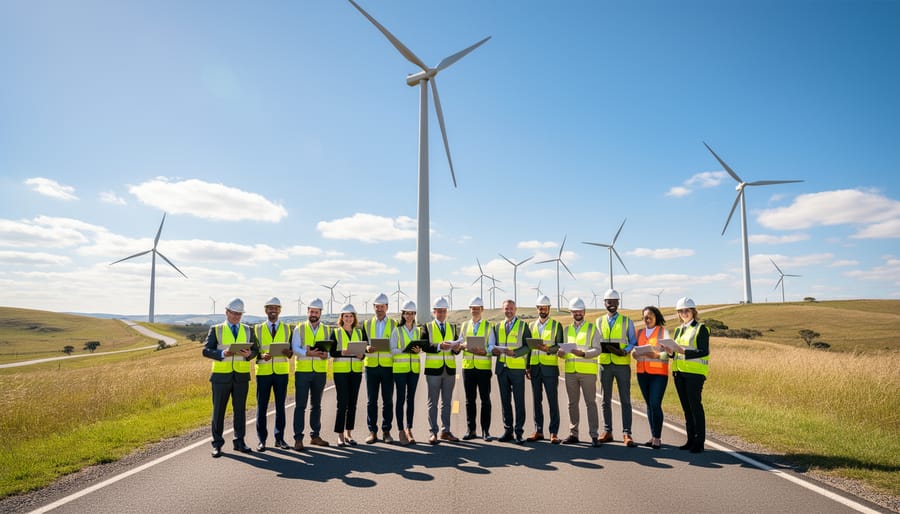
Wind energy companies have refined their promotional messaging around quantifiable performance metrics that resonate with both commercial buyers and community stakeholders. Unlike solar’s residential accessibility, wind businesses emphasize industrial-scale capabilities and long-term performance data that appeal to utility partners, corporate energy buyers, and municipal decision-makers.
Turbine efficiency ratings anchor most wind company marketing materials. Firms prominently display capacity factors, the percentage of maximum possible output a turbine actually generates over time, typically ranging from 25% for onshore installations to 45% for offshore projects. These numbers matter because they directly translate to revenue projections and payback timelines. Leading companies publish verified performance data from existing installations, showing how their turbines perform across different wind regimes and weather conditions.
| Installation Type | Target Market | Key Promotional Features |
|---|---|---|
| Small-Scale Onshore | Farms, small businesses | Low maintenance, quick ROI, grid independence |
| Commercial Onshore | Industrial facilities, municipalities | Capacity factors 30-35%, predictable output, community revenue sharing |
| Offshore | Utilities, large corporates | Capacity factors 40-45%, higher wind speeds, scalability, consistent generation |
Maintenance programs feature heavily in wind company pitches. Businesses promote comprehensive service packages that include predictive monitoring, blade inspections, and rapid-response repair teams. These programs address buyer concerns about operational downtime and unexpected costs, similar to how hydropower basics emphasize reliability for baseload generation.
Environmental impact credentials have become non-negotiable in wind marketing. Companies showcase third-party wildlife studies, noise mitigation technologies, and decommissioning plans. Community benefit programs, local hiring commitments, education partnerships, and revenue-sharing arrangements, differentiate firms competing for the same project sites, turning what could be opposition into local support.
Emerging Wind Technologies Companies Are Promoting
Wind companies are differentiating themselves by promoting cutting-edge technologies that address traditional limitations and expand market applications. Floating offshore wind turbines have emerged as a major selling point, allowing installations in deeper waters previously considered unfeasible. These platforms unlock vast new areas for wind generation, particularly in regions where seabed-fixed turbines cannot operate economically.
Vertical axis wind turbines (VAWTs) are gaining promotional traction for urban and distributed applications. Unlike conventional horizontal designs, VAWTs capture wind from any direction without repositioning, operate more quietly, and present a smaller visual footprint, features businesses emphasize when marketing to residential and commercial clients in populated areas.
Hybrid renewable systems combining wind with solar or battery storage represent another promotional frontier. Companies highlight how these integrated solutions provide more consistent power output and better match energy supply with demand patterns, making them attractive for off-grid applications and microgrids.
Smart grid integration capabilities have become essential promotional features, with companies showcasing advanced forecasting algorithms, automated curtailment responses, and real-time performance monitoring that help grid operators manage variable renewable generation more effectively.
Hydropower: Leveraging Reliability in Business Messaging
The Stability Factor in Hydropower Marketing
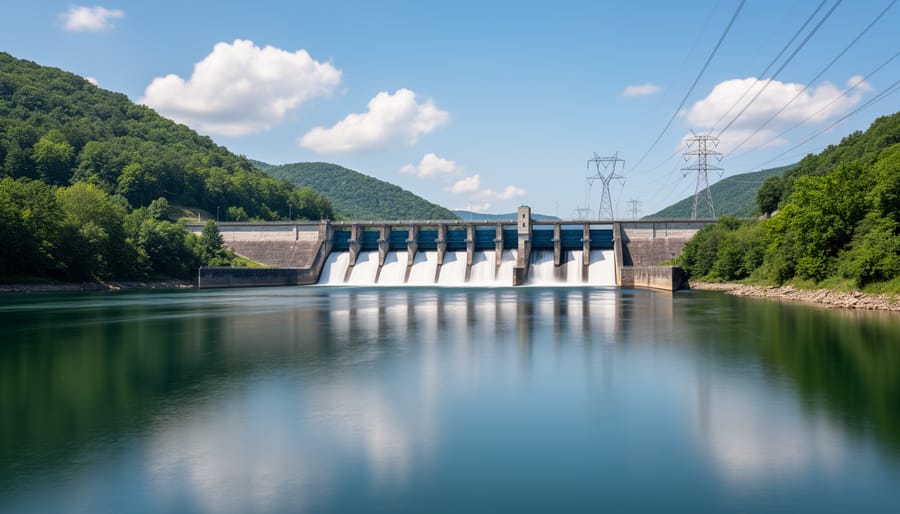
Hydropower companies position reliability as their cornerstone marketing message, building campaigns around operational records that stretch back 50 to 100 years at established facilities. This longevity provides tangible proof of performance that newer renewable technologies cannot match. Marketing materials frequently highlight capacity factors exceeding 40-50%, significantly higher than solar’s typical 15-25% or wind’s 25-35%, demonstrating consistent energy output regardless of weather patterns or seasonal variations.
The baseload power capability distinguishes hydropower in promotional messaging. Unlike solar and wind that generate intermittently, hydropower facilities can dispatch electricity on demand, matching grid requirements hour by hour. Companies emphasize this controllability through case studies showing how their plants provide 24/7 power generation, maintaining stable voltage and frequency that grid operators depend on. This reliability translates into promotional advantages when targeting industrial clients and utility partnerships requiring predictable energy delivery.
Hydropower businesses leverage performance data spanning decades to demonstrate maintenance costs, uptime percentages, and generation consistency. Promotional content often features graphs showing uninterrupted operation through economic downturns, extreme weather events, and technological shifts, evidence that resonates with risk-averse investors and municipal decision-makers. The proven track record becomes a competitive differentiator, particularly when companies showcase facilities that have operated continuously since the mid-20th century while maintaining or improving efficiency through periodic upgrades.
Modern Hydropower Features That Drive Business
Today’s hydropower companies promote a diverse portfolio of technologies that extend far beyond traditional large dams. Micro-hydro systems have emerged as a major selling point, offering businesses scalable solutions from 5kW to 100kW that serve remote communities, industrial facilities, and agricultural operations. These systems require minimal infrastructure, often just a diversion weir and penstock, making them attractive for distributed generation projects where grid connection proves impractical or expensive.
Pumped storage facilities represent another significant promotional focus. Companies highlight these systems’ ability to store excess renewable energy during low-demand periods and release it during peak hours, essentially functioning as massive batteries. With round-trip efficiencies reaching 75-85%, pumped storage addresses one of renewable energy’s biggest challenges: intermittency. Businesses emphasize their role in grid stabilization, particularly as solar and wind capacity increases.
Modernization retrofits have become a cornerstone of hydropower marketing strategies. Rather than building new facilities, companies now specialize in upgrading existing dams with advanced turbine designs, digital monitoring systems, and automated controls that can boost output by 15-30% without expanding the facility’s footprint. These retrofits appeal to utilities and municipalities seeking to maximize existing infrastructure investments while minimizing environmental disruption.
Environmental mitigation technologies represent perhaps the most transformative promotional angle. Companies now showcase fish passage systems, including nature-like fishways and trap-and-transport programs, alongside real-time water quality monitoring and adaptive release schedules. Some promote dissolved oxygen injection systems and temperature control curtains that maintain downstream ecosystem health. These features directly address historical criticisms, positioning modern hydropower as environmentally responsible. Businesses bundle performance guarantees with ecological outcomes, demonstrating that power generation and environmental stewardship aren’t mutually exclusive in 2026.
Overcoming Perception Challenges Through Strategic Promotion
Hydropower companies face unique marketing obstacles tied to outdated perceptions of large dams and habitat disruption. Successful businesses counter these concerns by forefront environmental innovations in their messaging. They showcase fish-friendly turbine designs that allow safe passage for aquatic species, run-of-river systems that minimize reservoir impacts, and active participation in watershed restoration projects.
Smart promotion highlights third-party environmental certifications and before-after ecosystem studies that demonstrate ecological compatibility. Companies publish transparent impact assessments and partner with conservation organizations to build credibility. Visual content showing wildlife coexisting with modern installations proves particularly effective. Rather than avoiding environmental questions, leading hydropower businesses position themselves as stewards who balance clean energy with habitat protection, turning a potential weakness into a demonstration of responsible innovation that resonates with environmentally conscious clients.
How to Promote Your Renewable Energy Business Effectively
Highlighting Technical Features Without Overwhelming Clients
Renewable energy companies often struggle to balance technical credibility with client accessibility. The solution lies in translating specifications into tangible outcomes rather than drowning prospects in data sheets.
Start with real-world scenarios that mirror your client’s situation. Instead of leading with panel efficiency percentages, show a comparable business that cut energy costs by 40% within eighteen months. Concrete examples make abstract technology relatable and build confidence faster than technical jargon.
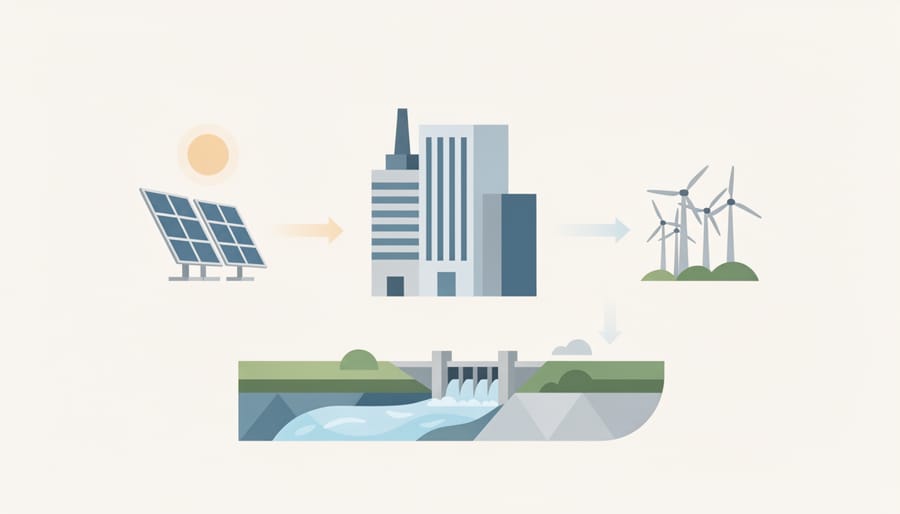
Visual demonstrations bridge the knowledge gap effectively. Interactive calculators that convert kilowatt-hours into dollar savings give prospects immediate, personalized value. Before-and-after energy consumption graphs, installation time-lapse videos, and simple infographics explaining how systems work demystify complex processes without requiring engineering knowledge.
Comparison tools should focus on outcomes, not specifications. Rather than comparing inverter models by maximum power point tracking algorithms, present what matters to clients: warranty length, expected lifespan, and maintenance requirements. Frame choices around business goals like “fastest ROI” versus “maximum long-term savings” rather than technical distinctions.
Benefit-led messaging transforms how prospects engage with your offerings. Lead every technical feature with its practical advantage. A 25-year warranty means decades of predictable energy costs. Modular installation translates to scaling capacity as business grows. This approach respects client intelligence while removing barriers to decision-making, positioning your company as a partner focused on solving problems rather than selling components.
Leveraging Industry Directories and Digital Platforms
In today’s competitive renewable energy market, specialized directories and digital platforms serve as essential tools for businesses seeking to expand their reach beyond traditional marketing channels. Unlike generic business listings, renewable energy directories connect companies directly with pre-qualified prospects already searching for solar, wind, or hydropower solutions.
The most effective platforms allow businesses to showcase technical capabilities, certifications, and completed projects in structured formats that help potential clients compare options quickly. Companies that invest time in creating detailed, accurate listings, complete with service area maps, technology specifications, and verified customer reviews, consistently outperform those with basic contact information alone. These directories function as both discovery tools for new clients and credibility validators, particularly when they feature third-party verification systems or industry endorsements.
Beyond static listings, interactive platforms that enable direct communication through inquiry forms, live chat, or instant quote requests generate higher-quality leads than passive directory entries. Companies should maintain consistent information across all platforms, regularly update project galleries with recent installations, and actively monitor listings for customer questions or reviews. This ongoing engagement signals to potential clients that the business is active, responsive, and invested in customer service, qualities that matter significantly in long-term renewable energy partnerships where installation quality and post-installation support determine project success.
Building Trust Through Transparency and Certification
In renewable energy marketing, credentials matter as much as technology. Businesses that display industry certifications, NABCEP accreditation, ISO standards, or Clean Energy Council approval, immediately signal professionalism and competence to prospective clients. Third-party performance verifications from independent testing laboratories provide objective proof that your systems deliver promised results, removing skepticism from the decision-making process.
Performance data transparency builds credibility that generic claims cannot match. Publishing actual energy production metrics, efficiency rates, and maintenance records from completed projects demonstrates accountability. Sharing both successes and limitations shows honesty that resonates with informed buyers who understand no technology is perfect.
Customer testimonials backed by verifiable project details carry exceptional weight. Rather than polished corporate speak, authentic reviews that include specific installation timelines, cost savings achieved, and support experiences address what clients want to know before committing. Video testimonials from commercial clients discussing their renewable energy partnership add human connection that written specs alone cannot provide, turning satisfied customers into your most persuasive promotional asset.
The renewable energy landscape in 2026 offers distinct promotional opportunities for businesses across solar, wind, and hydropower sectors. Each technology brings its own marketing strengths: solar’s visual appeal and accessibility, wind’s innovation-driven narrative, and hydropower’s reliability-focused messaging. Success comes from understanding which features resonate with your target market and presenting them in ways that build trust while demonstrating clear value.
Companies that thrive don’t just list specifications. They translate technical capabilities into tangible business benefits, using real performance data, verified certifications, and genuine customer outcomes to support their claims. Whether you’re emphasizing solar’s quick ROI, wind’s cutting-edge turbine technology, or hydropower’s decades-proven stability, your promotional strategy should connect features directly to client needs.
The tools available for reaching qualified leads have never been more powerful. Industry directories, specialized platforms, and digital resources give renewable energy businesses unprecedented access to decision-makers actively seeking solutions. Taking advantage of these channels, combined with transparent communication about what your technology actually delivers, positions your company for sustainable growth.
As the renewable energy market expands, businesses that strategically highlight their unique strengths while maintaining credibility through honest, client-focused messaging will capture the greatest market share. The opportunity is significant, and the resources to capitalize on it are within reach for companies ready to promote effectively.