


Global networks enabling responsible online casino play function through interconnected regulatory bodies, technology platforms, and self-exclusion databases that share player protection data across jurisdictions in real time. These collaborative systems allow operators to identify at-risk players, enforce deposit limits, and honor exclusion requests regardless of where someone attempts to play trending casino games creating a safety net that transcends individual company policies or national borders.
The infrastructure mirrors well-regulated systems in renewable energy sectors, where multiple stakeholders coordinate through shared standards and transparent oversight. In the online gambling space, this coordination involves licensing authorities from Malta to Gibraltar, payment processors who flag unusual transaction patterns, and technology providers who build mandatory cooling-off periods directly into gaming software.
What makes these networks effective is their operational design. When a player in Australia registers for self-exclusion, that information propagates through central registries accessible to licensed operators across Europe, Canada, and other participating regions. The same architecture powers deposit monitoring tools that alert players approaching spending thresholds and temporarily lock accounts when behavior patterns suggest problem gambling.
The framework addresses a fundamental challenge: online casinos operate globally while player protection traditionally relied on local regulation. By 2026, the mature network architecture demonstrates how international cooperation can protect consumers without requiring unified legislation. Understanding how these systems work empowers players to make informed choices and helps industry stakeholders implement more effective safeguards.
What Defines a Global Network for Responsible Online Casino Play
A global network for responsible online casino play is not a single organization but an interconnected ecosystem where regulatory bodies, technology platforms, financial institutions, and independent auditors coordinate to protect players across jurisdictions. This network operates through shared databases, standardized protocols, and enforcement agreements that transcend national borders, similar to how international certification bodies in renewable energy create unified standards for solar panel quality or carbon offset verification. The system works because participants recognize that gambling addiction and player exploitation are global issues requiring coordinated responses rather than fragmented national efforts.
At its core, the network relies on regulatory cooperation between licensing jurisdictions. Authorities in Malta, the United Kingdom, Gibraltar, and the Isle of Man maintain formal agreements to share information about problem operators, suspend licenses simultaneously when violations occur, and enforce minimum responsible gambling requirements. This cross-border oversight ensures that a casino revoked in one jurisdiction cannot simply relocate to another and continue operating unchecked.
Technology platforms form the second pillar, connecting operators through centralized self-exclusion databases and behavioral monitoring systems. When a player in Sweden self-excludes from one casino, that decision propagates through the network to hundreds of participating operators across Europe and beyond. These systems also flag concerning patterns, rapid deposit escalation, late-night gambling sessions, chasing losses, triggering intervention protocols before significant harm occurs.
Financial institutions complete the network by controlling the flow of money between players and operators. Payment processors monitor transactions for unusual patterns, block transfers to blacklisted casinos, and enforce deposit limits set by regulators or players themselves. This financial layer acts as the enforcement mechanism, making it difficult for unlicensed operators to accept payments or for excluded players to circumvent protections by switching payment methods.
The Multi-Layer Framework: How Responsible Gambling Standards Are Enforced Globally

International Regulatory Cooperation and Licensing Networks

Leading licensing jurisdictions coordinate player protection through formal information-sharing agreements and standardized enforcement protocols. The Malta Gaming Authority, UK Gambling Commission, and Gibraltar Regulatory Authority maintain active communication channels where they exchange data on operator compliance histories, disciplinary actions, and license revocations. When one jurisdiction identifies a problematic operator, whether for failing to prevent money laundering, ignoring self-exclusion requests, or manipulating game outcomes, that information flows to partner regulators within 48 hours, allowing them to investigate or suspend licenses preemptively.
These networks establish baseline protection requirements that licensed operators must meet regardless of where they’re headquartered. All participating jurisdictions now mandate real-time deposit limits, mandatory session reminders, and access to certified random number generators. The International Association of Gaming Regulators, which includes 120 member jurisdictions, publishes minimum standards that cover everything from customer fund segregation to advertising restrictions targeting vulnerable populations.
Mutual recognition agreements streamline compliance for operators serving multiple markets. A casino licensed in Malta that seeks UK approval can present its Malta compliance record as evidence of meeting core standards, reducing redundant audits while maintaining oversight. This framework prevents regulatory arbitrage, where operators might otherwise seek the least restrictive jurisdiction.
The network maintains a shared database of directors and beneficial owners barred from the industry. If a problem operator loses licenses in multiple jurisdictions, the individuals behind that company cannot simply relaunch under a new brand in a different territory. This cross-border accountability closes gaps that existed when jurisdictions operated in isolation, creating a coordinated defense against operators who view player protection as negotiable rather than mandatory.
Technology Infrastructure: Self-Exclusion Databases and Real-Time Monitoring
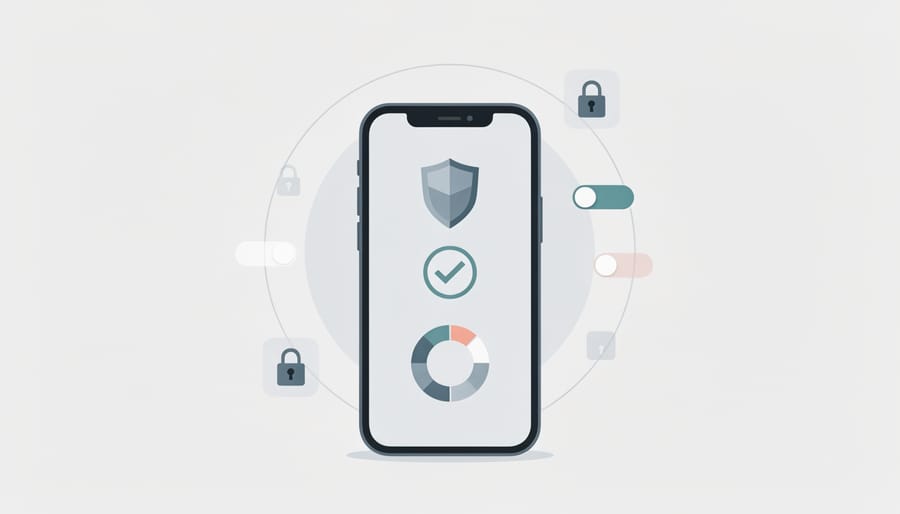
The technical backbone of responsible gambling networks consists of integrated systems that monitor player behavior and enforce protective measures across thousands of online casinos simultaneously. These platforms operate through centralized databases that communicate in real-time with licensed operators, creating a safety net that transcends individual casino boundaries.
Multi-operator self-exclusion registries form the foundation of this infrastructure. When a player registers for self-exclusion in one jurisdiction, the system automatically blocks access across all participating casinos within that network, often within minutes. These registries use identity verification protocols, including passport checks and biometric data, to prevent excluded players from creating new accounts under different names or email addresses. In Europe, platforms like CRUKS in the Netherlands and OASIS in Germany maintain databases that cover hundreds of operators, while the UK’s GAMSTOP network has excluded over 300,000 individuals since 2018.
Behavioral analytics powered by AI monitoring tools track patterns that signal problem gambling: escalating bet sizes, chasing losses after midnight, depleting account balances within minutes, or returning immediately after self-imposed breaks. When algorithms detect these red flags, the system triggers interventions ranging from mandatory timeout periods to account freezes requiring contact with support teams.
Key technological components working across this network include:
- Multi-operator self-exclusion platforms that sync player restrictions across hundreds of casino brands
- AI-powered behavior detection analyzing wagering patterns, session duration, and financial velocity
- Mandatory cooling-off periods that lock accounts for 24 to 72 hours after specific triggers
- Reality check timers interrupting play at set intervals to display time and money spent
- Automated intervention triggers that restrict deposits or pause play when risk thresholds are exceeded
These systems communicate through standardized APIs that allow payment processors to enforce deposit limits even when players attempt to circumvent controls by switching casinos. The network architecture ensures that protective measures follow the player, not just the platform.
Financial Controls and Payment Network Responsibilities
Payment processors and banks serve as crucial checkpoints in the responsible gambling network, operating specialized financial controls that complement regulatory oversight. These institutions maintain real-time transaction monitoring systems that flag irregular gambling patterns, sudden large deposits, rapid-fire transactions, or spending inconsistent with a customer’s typical profile. When banks detect these behaviors, they can trigger intervention protocols or temporarily halt transactions for verification.
Payment networks also enforce licensing compliance by maintaining updated blacklists of unlicensed operators. Card networks refuse to process payments to these sites, effectively cutting off their access to mainstream banking channels. This creates a financial barrier that protects players from unregulated platforms lacking proper protections.
Deposit limit enforcement happens at the payment level too: processors can block transactions that exceed player-set limits across multiple casino brands. In cases where vulnerable individuals were exploited, minors gambling or self-excluded players accessing sites, payment networks facilitate chargebacks and refunds, working with banks to reverse unauthorized transactions and return funds to affected parties.
How Players Benefit from Global Network Coordination
When operators participate in global responsible gambling networks, players gain tangible protections that travel with them across platforms and jurisdictions. These coordinated systems create a safety net that functions regardless of which licensed casino a person chooses or where they’re physically located.
The most immediate benefit is consistent baseline protection. A player who sets a £500 monthly deposit limit with one UK-licensed operator can expect similar limit-setting tools at any other network-participating casino. Self-exclusion decisions carry weight across hundreds of brands simultaneously, someone who recognizes they need a break from gambling can activate protections that block access to multiple operators at once, rather than playing whack-a-mole with individual site exclusions. This portability prevents the common scenario where a player excludes from one casino only to immediately sign up at another under the same corporate umbrella.
Transparent dispute resolution represents another critical advantage. When conflicts arise, whether over bonus terms, payment delays, or account closures, players can escalate complaints to independent adjudication bodies that network operators agree to honor. These dispute services maintain public records of complaints and resolutions, creating accountability that influences operator behavior. UK Gambling Commission licensees, for instance, must respond to Alternative Dispute Resolution findings, giving players meaningful recourse beyond customer service tickets.
Network participation also simplifies verification of operator legitimacy. Rather than researching each casino independently, players can check licensing registers maintained by coordinating jurisdictions. Malta Gaming Authority and UK Gambling Commission databases list all network-compliant operators, their ownership structures, and any enforcement actions taken against them. This transparency helps players avoid rogue operators before depositing money.
The coordination extends to vulnerable player identification. If someone shows problem gambling patterns at one casino, network systems can flag that profile across participating operators, triggering intervention protocols even at sites where they haven’t yet self-identified as at-risk. This proactive approach catches escalating problems earlier than isolated operator monitoring could achieve.
Case Study: Cross-Border Self-Exclusion Programs in Action
The ROFUS (Register of Forbidden Users) program in Sweden provides a clear demonstration of how centralized self-exclusion networks protect players across multiple operators. Launched by the Swedish Gambling Authority, ROFUS allows individuals to exclude themselves from all licensed online casinos operating in Sweden through a single registration. Once enrolled, the exclusion applies immediately across roughly 90 licensed operators, preventing account creation or gameplay for the specified period, ranging from one month to permanent exclusion.
Since implementation, ROFUS has registered over 45,000 individuals voluntarily seeking exclusion, with compliance rates exceeding 98% among licensed operators. Independent audits reveal that blocked login attempts, players trying to access casinos after self-exclusion, decreased by 67% within the first 18 months, indicating the system’s effectiveness in preventing circumvention across different brands and platforms.
The program includes automatic referral pathways to treatment services. Data shows that 34% of individuals who register for ROFUS subsequently contact support organizations like Stödlinjen, Sweden’s national gambling helpline, compared to less than 12% who attempted single-operator exclusions previously. This suggests centralized systems create stronger connections between problem recognition and intervention.
Similar multi-jurisdiction initiatives operate across Europe. The UK’s GAMSTOP covers over 450 online gambling sites, while Germany’s OASIS system coordinates exclusions across all licensed operators nationwide. These networks share a common architecture: real-time identity verification, encrypted data exchange between operators, and mandatory cooling-off periods before exclusion removal.
Player satisfaction surveys conducted by independent research groups indicate that 82% of users find multi-operator exclusion more effective than managing individual casino blocks, citing reduced decision fatigue and consistent protection as primary benefits. The coordinated approach eliminates the burden of contacting dozens of operators separately, transforming responsible gambling from a fragmented process into a streamlined protective measure.
Current Challenges and Evolving Standards in 2026
Despite significant progress in global coordination, responsible gambling networks face persistent obstacles in 2026. Cryptocurrency casinos present a growing challenge: many operate outside traditional licensing frameworks, making it difficult to enforce deposit limits, verify player identities, or include users in centralized self-exclusion databases. Because blockchain transactions bypass conventional payment processors, financial controls that work for standard online casinos often can’t be applied to crypto-only platforms.
Jurisdictional gaps remain problematic. While major licensing authorities in Europe and regulated markets cooperate effectively, operators based in loosely-regulated territories can still serve players worldwide without participating in responsible gambling networks. Enforcement proves difficult when servers sit in one country, payment processing happens in another, and players access sites from a third jurisdiction. International law doesn’t yet provide clear mechanisms for pursuing offshore operators who ignore protection standards.
The industry is responding with evolving standards adapted to new challenges. Blockchain-compatible identity verification systems are being developed to bring transparency to crypto gambling. Several jurisdictions are negotiating bilateral agreements to share enforcement resources and coordinate action against problem operators. Advanced AI monitoring tools now detect sophisticated patterns of problem gambling behavior that earlier systems missed, including activity spread across multiple platforms.
Universal identity verification remains a priority. The current patchwork approach, where each operator maintains separate player profiles, allows at-risk individuals to circumvent protections by opening accounts with different brands. Pilot programs testing biometric verification and cross-platform identity authentication are underway, though privacy concerns and technical complexity slow adoption. Progress requires balancing player protection with data security and individual rights.
Common Questions About Global Responsible Gambling Networks
Players and industry stakeholders frequently have questions about how global responsible gambling networks operate in practice. Understanding these mechanisms helps users make informed decisions and know where to turn when issues arise.
How do I know if a casino is part of the responsible gambling network?
Check for licenses from recognized jurisdictions like Malta, the UK, or Curacao, and look for certifications from independent testing agencies such as eCOGRA or iTech Labs. Licensed operators are required to display their license numbers prominently, usually in the website footer, and you can verify these directly with the issuing authority.
Can I self-exclude from all online casinos at once?
Regional programs like GAMSTOP in the UK and Cruks in the Netherlands allow single-registration self-exclusion across all licensed operators in those jurisdictions. For broader coverage, you may need to register with multiple programs, though industry initiatives are working toward more unified global systems.
What happens if an operator doesn’t honor responsible gambling protections?
Contact the licensing authority that issued the operator’s license first, as they have enforcement power including fines and license revocation. You can also file complaints with independent dispute resolution services like eCOGRA or the Gaming Commission’s player protection departments, which can investigate violations and order remediation.
Do cryptocurrency casinos participate in these networks?
Many crypto casinos operate outside traditional regulatory frameworks and do not participate in established responsible gambling networks. However, licensed crypto casinos that hold permits from recognized jurisdictions must comply with the same responsible gambling standards as traditional operators, including self-exclusion databases and player protection tools.
The effectiveness of these networks depends on active player participation. If you encounter an operator that refuses to honor self-exclusion requests or bypasses deposit limits, document all interactions and report them immediately to the relevant licensing authority. Most jurisdictions maintain dedicated player protection hotlines and online complaint portals that trigger formal investigations.
When evaluating an operator’s commitment to responsible gambling, look beyond marketing claims. Verify that protection tools are easily accessible in account settings, not buried in menus, and test whether limits take effect immediately. Reputable operators participating in global networks will provide transparent access to transaction histories, clear instructions for self-exclusion, and direct links to independent support organizations.
Global networks for responsible online casino play demonstrate how collaborative infrastructure can protect consumers across borders. These interconnected systems, linking regulators, technology platforms, financial institutions, and independent auditors, create a unified framework that transcends individual jurisdictions. Shared standards, real-time data exchange, and technological integration enable consistent player protections regardless of where gambling occurs.
This model mirrors the coordination seen in renewable energy networks, where certification bodies, grid operators, and technology providers work together to verify standards and build trust in decentralized marketplaces. Both systems succeed because participants commit to transparency, mutual accountability, and continuous improvement.
The network’s effectiveness depends on active participation from all stakeholders, including players themselves. Before registering with any online casino, verify licensing through official regulatory websites. Utilize self-exclusion programs that extend across multiple operators. Set deposit limits through the tools these networks provide. Report operators who circumvent protections to licensing authorities.
As technology evolves and new challenges emerge, from cryptocurrency platforms to cross-border enforcement gaps, these global networks continue adapting. Their collaborative foundation ensures that responsible gambling protections strengthen over time, creating safer digital environments for players worldwide.