

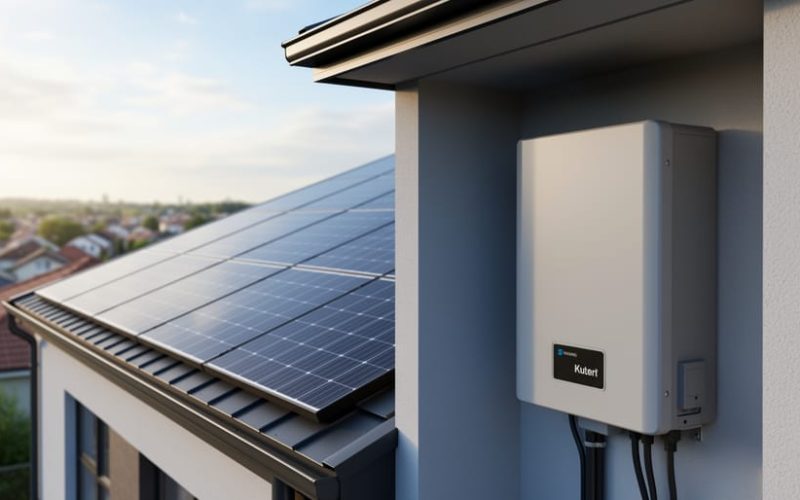
Government policy is reshaping how solar professionals and property owners finance battery storage systems, with Australia’s Cheaper Home Batteries Program leading a wave of regulatory changes that signal broader shifts in renewable energy support worldwide. Since July 2025, the Australian Government has been delivering approximately 30% discounts on battery installations through an expansion of the Small-scale Renewable Energy Scheme, covering systems from 5 kWh to 100 kWh for households, businesses, and community organizations. The program applies to batteries paired with both new and existing solar arrays, with discounts calculated based on usable capacity and small-scale technology certificates administered by the Clean Energy Regulator.
For solar industry professionals and business owners, this development matters because policy-driven financing mechanisms directly influence market demand, project economics, and competitive positioning. The Australian model demonstrates how governments are moving beyond simple tax credits toward structured discount programs that reduce upfront costs without creating additional consumer burdens. The program’s annual review schedule and planned phase-down through 2030 mirror declining battery prices, offering a template for sustainable policy design that other jurisdictions may adopt.
Understanding these policy shifts becomes essential for professionals navigating installation proposals, customer financing conversations, and business planning. As regulatory frameworks evolve, recognizing which programs offer genuine value versus political messaging helps solar businesses position services effectively and advise clients accurately on available incentives.
What Changed: Recent Policy Developments in Battery Storage Financing
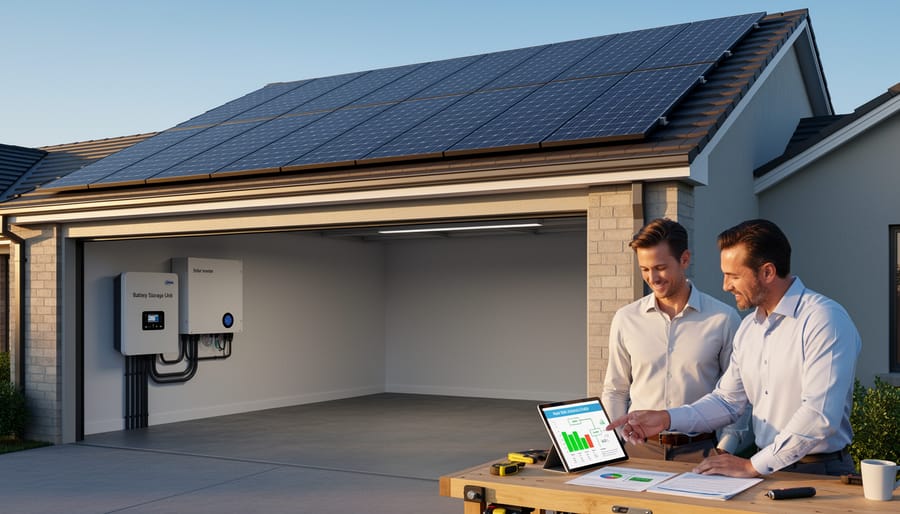
Government approaches to battery storage financing shifted dramatically in 2025, moving from scattered incentives to structured, long-term programs designed to accelerate residential and commercial adoption. This change reflects a broader political recognition that energy storage is no longer a niche technology but a critical infrastructure component for grid stability and renewable energy transition.
The most concrete example of this shift came when Australia launched its Cheaper Home Batteries Program on July 1, 2025, offering approximately 30% discounts on battery installations through 2030. The program’s structure, covering systems from 5 to 100 kWh for households, businesses, and community organizations, signals a deliberate effort to mainstream battery storage across different customer segments. Unlike earlier pilot programs or one-time rebates, this initiative integrates battery incentives into the existing Small-scale Renewable Energy Scheme, creating administrative efficiency and long-term market predictability.
This policy evolution reflects changing political calculations around energy independence, grid resilience, and climate commitments. Where earlier debates questioned whether batteries warranted public support, current discussions focus on how best to structure that support, whether through direct subsidies, loan guarantees, or hybrid financing models. Energy storage has become a political priority because it addresses multiple policy goals simultaneously: reducing peak demand strain on aging grids, enabling higher renewable penetration, and providing backup power during extreme weather events that have grown more frequent.
For solar industry professionals, this shift means battery financing is no longer subject to the political uncertainty that plagued earlier incentive programs. Governments are committing to predictable, multi-year support structures that allow businesses to plan installations and customers to make informed investment decisions.
Key Developments Shaping the Solar Battery Loan Landscape
1. Australia’s Cheaper Home Batteries Program: A 30% Discount Model
Australia’s Cheaper Home Batteries Program represents the most concrete policy intervention in battery storage financing to emerge in 2025. Launched on July 1, 2025, the initiative delivers an approximately 30% discount on battery installation costs through an expansion of the existing Small-scale Renewable Energy Scheme. Unlike theoretical proposals, this program is operational and providing tangible financial support to adopters across household, commercial and community sectors.
The program structure reflects a calculated approach to market stimulation. The discount applies to qualifying battery systems based on their usable capacity and the number of small-scale technology certificates they generate under the SRES framework. The STC-based battery calculation methodology ensures the subsidy scales proportionally to system size while maintaining consistency with existing renewable energy incentive mechanisms.
Key program parameters include:
- Open to Australian households, businesses and community organizations
- Covers battery systems from 5 kWh to 100 kWh capacity
- Applies to batteries paired with new or existing solar PV installations
- Administered by the Clean Energy Regulator
- Government-funded to prevent cost-shifting to consumers
The program eligibility and 5-100 kWh capacity range captures the vast majority of residential and small commercial applications, from modest home systems to larger business installations. Crucially, the program doesn’t discriminate between retrofit applications and new solar-plus-storage deployments, removing a potential barrier that could have excluded the substantial base of existing solar adopters.
The program operates through 2030 with built-in flexibility: annual reviews will adjust the discount rate downward as battery prices decline. This sunset mechanism acknowledges that subsidies should taper as market maturity reduces the need for intervention, while the guaranteed timeline through 2030 provides planning certainty for installers and customers alike.
2. Global Interest in Storage-Specific Financing Mechanisms
Governments worldwide are exploring dedicated financing approaches for battery storage, recognizing that batteries often face different economic challenges than solar panels alone. While Australia’s program demonstrates one model, other jurisdictions are examining structural mechanisms rather than launching fully-defined programs.
Loan guarantee frameworks represent one approach under consideration. These mechanisms would see governments partially backstop private lenders, reducing their risk when financing battery installations. The concept appeals to policymakers who want to catalyze private capital without directly subsidizing purchases, though debates continue over what percentage of risk governments should shoulder and which borrowers should qualify.
Low-interest financing structures are attracting attention in several regions. These typically involve governments either providing capital at below-market rates through public lending institutions or subsidizing interest payments on commercial loans. The challenge lies in determining sustainable interest rate reductions that meaningfully affect customer decisions without creating long-term fiscal obligations.
Grant-subsidy hybrids combine upfront discounts with financing components. Australia’s STC-based discount model fits this category, offering an immediate price reduction rather than a loan product. Other variations under discussion include rebate programs linked to financing terms or tiered incentives that increase when customers use specific loan products.
The political calculus differs across jurisdictions. Some governments prioritize speed of deployment, favoring direct subsidies like Australia’s approach. Others emphasize market sustainability, preferring mechanisms that engage private lenders. Solar industry professionals should monitor their local policy discussions, as these structural choices will determine which financing tools become available to customers and how those tools affect installation economics.
3. Political Debate Over Public vs. Private Financing Models
The question of who should finance battery storage expansion, governments or private lenders, has become a defining political divide in renewable energy policy debates.
Proponents of government-subsidized programs argue that public support accelerates adoption by removing the primary barrier: upfront cost. Australia’s battery discount program exemplifies this approach, with policymakers framing the initiative as essential infrastructure investment similar to historical support for rural electrification. Advocates contend that government intervention corrects market failures, helping households and businesses access technology that delivers long-term savings and grid benefits but remains out of reach without assistance. They point to the program’s funded structure, ensuring no extra consumer costs, as proof that public support can be designed sustainably.
Critics counter that market-driven financing better allocates capital and encourages competition among lenders to offer attractive terms. This perspective emphasizes that private loan products respond to consumer demand without taxpayer exposure, arguing that subsidies create artificial markets and delay the natural price discovery that would make batteries economically viable on their own merits. Some industry voices suggest hybrid models where government policy focuses on removing regulatory barriers and standardizing interconnection processes, allowing private financing to flow more freely.
The tension intensifies around program design questions: Should subsidies phase out as prices fall, as Australia’s annual review structure anticipates? Do government programs inadvertently favor certain manufacturers or installers? These debates shape not only national policy but also determine which financing pathways solar professionals can reliably offer customers seeking storage solutions.
Why Battery Storage Financing Matters to the Solar Industry
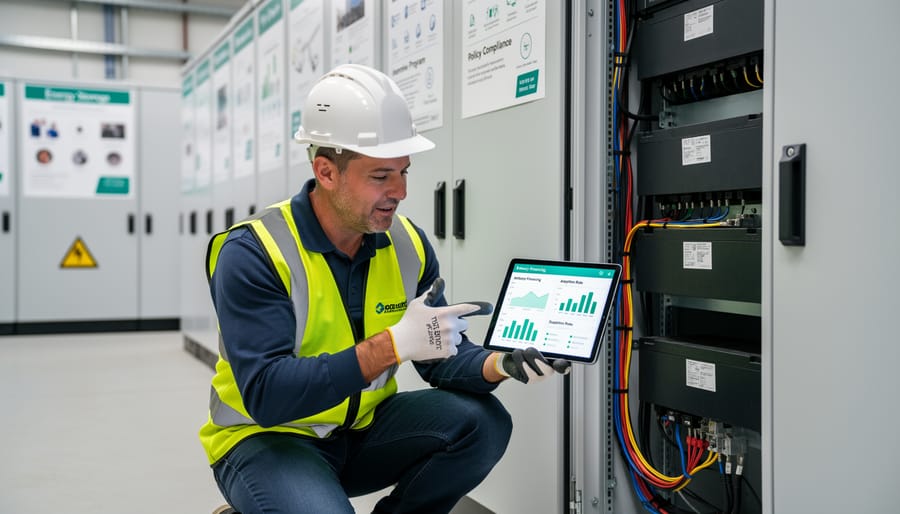
Battery storage financing policies directly influence whether solar professionals close deals or watch prospects defer decisions. When governments reduce upfront costs through programs like Australia’s 30% battery discount, customers who previously saw storage as prohibitively expensive suddenly have a path to ownership. This shifts the conversation from “maybe later” to “let’s install now,” compressing sales cycles and expanding the addressable market for installers and integrators.
The ripple effects extend across the supply chain. Manufacturers gain predictable demand signals that justify production investments and inventory commitments. Distributors can stock battery products with greater confidence when they know financing mechanisms will support consistent purchase volumes rather than boom-bust cycles driven purely by equipment prices. For project developers working with commercial or community-scale installations, understanding which battery capacities qualify for government support (such as the 5-100 kWh range in Australia’s program) shapes system design and financial modeling from the earliest planning stages.
Customer decision-making fundamentally changes when battery loans or subsidies enter the picture. A household weighing solar-plus-storage against solar-only will factor in both the immediate discount and the long-term value of backup power and grid independence. Your ability to explain available incentives and their eligibility requirements becomes as important as system specifications. Solar businesses that integrate financing knowledge into their sales process, explaining client features like monitoring, warranty coverage, and operational savings alongside policy benefits, position themselves as trusted advisors rather than equipment vendors.
The broader energy transition depends on storage deployment at scale, and financing is the unlock mechanism. Without accessible loan products or subsidy programs, battery adoption remains confined to early adopters with available cash. Policy support accelerates the curve, creating market conditions where storage becomes standard rather than optional. For solar professionals, this means planning workforce capacity, supply agreements, and service capabilities around an expanding storage market rather than treating batteries as a niche add-on to solar installations.
What to Watch: Political Factors That Will Shape Battery Financing

Several political dynamics will influence how battery storage financing evolves over the next few years, and solar professionals should track these developments closely to anticipate market opportunities and advise customers effectively.
Government program expansions represent the most immediate factor to monitor. Australia’s Cheaper Home Batteries Program includes annual reviews through 2030, with potential adjustments to discount levels, capacity thresholds, or eligibility criteria. These reviews could expand access or shift incentives based on adoption rates and budget considerations. Solar installers should subscribe to Clean Energy Regulator updates to catch changes before customers ask about them.
Election cycles will bring energy policy into sharper focus. Battery storage financing often becomes a campaign talking point when candidates debate climate action and energy affordability. Different political parties typically propose contrasting approaches: some favor expanding government subsidies and loan programs, while others push for market-driven solutions with minimal public support. The outcomes of these debates directly affect what financing options your customers can access and how you position battery installations.
Grid modernization discussions will shape the broader policy environment for storage. As utilities and regulators grapple with integrating distributed energy resources, they are considering policies that link battery incentives to grid services. This could mean future programs require batteries to participate in virtual power plants or offer time-of-use discharge capabilities. Understanding these technical requirements early helps solar businesses prepare installation practices and customer education.
International policy coordination is gaining momentum. Countries are watching each other’s storage programs and considering similar impacts in South Australia and other early-adopter regions. Policy ideas that succeed in one jurisdiction often inspire adaptations elsewhere, creating opportunities for solar professionals who stay informed about global trends.
Common Questions About Solar Battery Loans and Political Programs
How do government battery programs affect financing options?
Government programs like Australia’s Cheaper Home Batteries Program reduce upfront costs through direct discounts rather than traditional loan products, making financing more accessible by lowering the principal amount customers need to borrow. This shifts some financing conversations from “can I afford the loan” to “how should I structure payment for the reduced cost.”
Who qualifies for battery storage incentives?
Australia’s program covers households, businesses, and community organizations installing battery systems between 5 kWh and 100 kWh capacity, whether connected to new or existing solar PV systems. Eligibility criteria vary by jurisdiction, so solar professionals should verify current program requirements before advising customers.
Should customers wait for better political developments before installing batteries?
Programs like Australia’s initiative are already active and scheduled to decrease over time until 2030 as battery prices fall, meaning waiting typically reduces available support. While political discussions continue, existing verified programs offer immediate benefits that may not improve with delay.
What should solar businesses communicate about available incentives?
Focus on concrete, verified programs rather than speculative policy proposals. Explain how current incentives work (like the STC-based discount calculation in Australia’s program), confirm customer eligibility, and help clients understand how government support integrates with their overall financing strategy.
The intersection of policy and financing creates both opportunities and confusion for solar professionals and their customers. Understanding how government decisions translate into practical financing options helps businesses guide solar customer decisions more effectively. When discussing battery loans and political programs, emphasize what’s confirmed and available now rather than what might emerge from ongoing policy debates, ensuring customers can make informed decisions based on current reality rather than speculation about future developments.
Solar battery loans have moved from niche financing conversations to the center of political energy debates, with government initiatives like Australia’s Cheaper Home Batteries Program demonstrating concrete policy action. The approximately 30% discount available since July 2025 represents more than financial support, it signals growing recognition that storage financing will determine how quickly households and businesses can transition to resilient renewable systems. This shift creates immediate opportunities for solar professionals who position themselves as policy-informed advisors, not just installers.
As battery storage becomes intertwined with grid modernization discussions and election-year energy priorities, staying current with policy developments is no longer optional for solar businesses. The professionals who monitor program changes, understand eligibility nuances, and communicate financing options clearly will capture market share in an expanding sector. The connection between policy support and renewable growth 2026 is direct: when governments reduce financial barriers, customer inquiries increase and installation pipelines fill. Track political discussions, educate customers about available programs, and build relationships with financing partners positioned to respond as policies evolve.